.png)
.png?width=50&height=50&name=Untitled%20design%20(6).png)
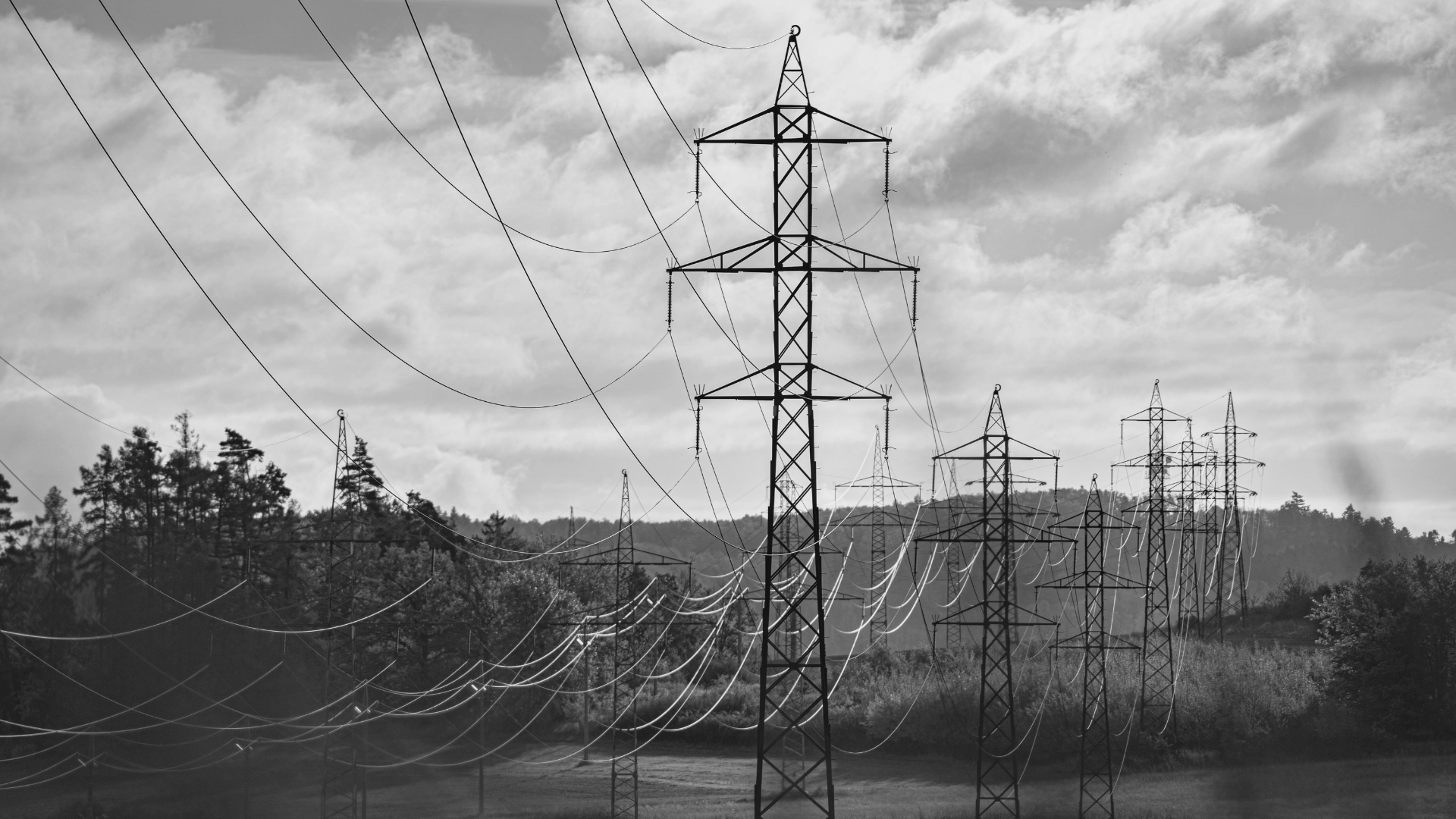
The surge in artificial intelligence and data center development is creating unprecedented demand on America's electric grid. "Powering Data Centers: How AI Is Reshaping the U.S. Power Grid," presented by George "Chip" Cannon of Hogan Lovells, explores how this explosion in power demand is straining infrastructure, increasing electricity costs, and forcing regulators to rethink how the nation's power system operates. This course provides essential context for attorneys navigating energy regulation, infrastructure development, and the intersection of technology and utility law.
Why Is AI Development a National Priority… and a Grid Challenge?
Data centers and AI infrastructure have become critical to national security, economic competitiveness, and technological leadership. The Trump administration has issued multiple executive orders emphasizing the strategic importance of domestic AI capacity, citing concerns about cybersecurity, military applications, and the need to avoid dependence on foreign data processing.
However, this national priority comes with a massive infrastructure challenge:
- In 2023, data centers consumed 176 terawatt hours of power, equivalent to powering 16 million homes for a year.
- By 2028, that number could reach 325 to 580 terawatt hours, representing up to 12% of all U.S. generating capacity.
- The 5-year forecast for peak utility load growth has increased sixfold since 2022, with much of the increase driven by AI and data centers.
AI data centers are particularly power-intensive because they use graphics processing units (GPUs) and tensor processing units (TPUs) for machine learning, consuming significantly more electricity than traditional data centers that rely on central processing units (CPUs).
Every AI-powered Google search uses 100% more power than a traditional search. In this clip, Chip Cannon breaks down the staggering numbers behind data center power consumption:
How Is the U.S. Power Sector Regulated?
Understanding the regulatory framework is essential to grasping why data center development faces such significant hurdles.
Federal vs. State Jurisdiction:
The Federal Power Act divided regulatory authority between federal and state governments:
- The Federal Energy Regulatory Commission (FERC) regulates:
- Wholesale sales of electricity in interstate commerce
- Interstate transmission lines (typically 69 kilovolts and above)
- Generator interconnection to the transmission grid
- Wholesale sales of electricity in interstate commerce
- State Public Utility Commissions regulate:
- Retail sales of electricity to end users
- Local distribution lines
- Energy policy (whether to build coal, gas, or renewable facilities)
- Transmission line siting and permitting
- Retail sales of electricity to end users
This division of authority, often called "cooperative federalism," creates complexity when large infrastructure projects span multiple jurisdictions.
What Barriers Prevent Faster Data Center Development?
Despite political will at the federal level, data centers face significant obstacles related to power supply and grid access.
Grid Access and Interconnection Delays:
- Generator interconnection queues are severely backlogged, with wait times of up to six years for new power plants.
- Data centers can be built in months, but the power infrastructure needed to serve them takes years.
- Developers must navigate multiple regulatory processes at both federal and state levels.
Transmission Infrastructure Constraints:
- Much of America's electric grid is nearly 100 years old.
- Building new transmission lines across state boundaries requires approval from each state, a slow and politically fraught process.
- The lack of transmission capacity is one of the biggest barriers to meeting surging electricity demand.
State Siting Authority:
- Even when FERC approves interstate transmission projects, states retain authority over where lines can be built.
- Local opposition (NIMBYism) can delay or block critical infrastructure.
- Unlike in countries like China, the U.S. cannot simply mandate where facilities will be located.

How Are Data Centers Impacting Electricity Rates?
One of the most politically sensitive issues is whether data center development is driving up electricity costs for residential and small commercial customers.
Why Rates Are Rising:
- Utilities must invest in new generation and transmission infrastructure to serve massive new loads.
- These infrastructure costs are typically recovered through rates charged to all customers.
- The question becomes: should data centers bear the full cost of the infrastructure needed to serve them, or should costs be spread across all ratepayers?
State Responses:
- Nearly every state is examining the rate impacts of data center development.
- In 2025, several states enacted legislation requiring data centers to cover the full cost of their grid access and power supply.
- States like Virginia, Georgia, and New Jersey have made data center cost allocation a central issue in political debates.
Cost Allocation Challenges:
- It's not that data centers refuse to pay their fair share; the challenge is determining what those costs actually are.
- When a data center connects to the grid, it may require upgrades elsewhere in the system.
- Regulators must determine whether those upgrade costs should be borne solely by the data center or shared with other customers who also benefit.
What Is "Behind-the-Meter" Co-Location?
Facing long wait times for new generation, some data center developers have pursued co-location with existing power plants, particularly nuclear facilities.
How It Works:
-
A data center connects directly to a power plant rather than to the transmission grid.
-
The arrangement is called "behind-the-meter" because the data center is not technically taking transmission service.
-
This allows the data center to access reliable power without waiting for new generation to be built.
Regulatory Concerns:
-
Even though the data center isn't directly connected to the grid, it still benefits from grid services and reliability.
-
Should the co-located data center pay for the transmission and grid services it indirectly relies on?
-
If a major power plant diverts electricity to a behind-the-meter data center, it has the same impact as retiring that generation from the grid, affecting reliability for other customers.
In late 2024, FERC rejected a high-profile co-location proposal involving Amazon and the Susquehanna nuclear facility, citing concerns about cost shifting to other ratepayers.
What Is Retail Choice, and How Does It Affect Data Centers?
In most states, customers must buy electricity from their local monopoly utility. However, some states have "retail choice," allowing customers to select their electricity supplier.
States with Retail Choice:
- Texas, Pennsylvania, Ohio, Illinois, Maryland, Delaware, New Jersey, New York, Massachusetts, Connecticut, Rhode Island, New Hampshire, Maine, and the District of Columbia
Impact on Data Centers:
-
In retail choice states, data centers can buy power directly from independent power producers rather than the local utility.
-
This provides more flexibility and potentially faster access to power.
-
Some states without retail choice have created special "microgrid districts" where data centers can bring their own generation.
What Is FERC Doing to Address Data Center Demand?
FERC has jurisdiction over wholesale power markets, transmission, and generator interconnection. However, the agency has struggled to keep pace with surging demand.
Ongoing Challenges:
- Generator interconnection reform has been a priority for every FERC configuration in recent memory, yet queues remain severely backlogged.
- Transmission infrastructure development remains slow due to state siting authority and local opposition.
- Even with political will from the current administration, physical and regulatory barriers remain.
Recent Proposal:
-
The Department of Energy has proposed that FERC take over data center interconnection from the states.
-
This would centralize and standardize the process, rather than requiring developers to navigate 50 different state regulatory regimes.
-
However, critics question whether FERC, already struggling with generator interconnection, can effectively manage data center interconnection as well.
How Are States Balancing Competing Priorities?
State regulators face tension between multiple policy goals.
Encouraging Data Center Investment:
-
Data centers bring tax revenue and (some) jobs
-
States offer incentives to attract developers
Protecting Ratepayers:
-
Ensuring data centers don't shift infrastructure costs onto residential customers
-
Preventing dramatic rate increases that could become politically toxic
Meeting Clean Energy Goals:
-
Many states have renewable portfolio standards requiring utilities to source a percentage of power from clean energy
-
The massive power demand from data centers is being met largely by natural gas generation, potentially undermining state climate goals
Key Takeaways
- Data center and AI development is a national security priority, but faces significant infrastructure barriers related to power supply and grid access.
- The U.S. power grid is antiquated, and building new generation and transmission takes years, far longer than the months needed to construct a data center.
- Cooperative federalism creates complexity: federal and state regulators share jurisdiction, making it difficult to coordinate large-scale infrastructure projects.
- Cost allocation is the most politically sensitive issue: regulators must ensure data centers pay their fair share without burdening residential customers with higher rates.
- Generator interconnection queues are severely backlogged, with wait times up to six years for new power plants to come online.
- Behind-the-meter co-location offers a potential workaround but raises concerns about cost shifting and grid reliability.
- Retail choice states provide more flexibility for data centers to procure power from independent suppliers.
- FERC is considering federal oversight of data center interconnection to standardize and expedite the process, though challenges remain.
For a deeper dive on this topic, watch the full Lawline course "Powering Data Centers: How AI Is Reshaping the U.S. Power Grid," presented by George "Chip" Cannon of Hogan Lovells.
The content of this article is provided for informational purposes only and does not constitute legal advice.
Further Your Legal Education With Lawline Courses
Interested in learning more strategies and tips for becoming a better lawyer? Lawline offers a wide assortment of informative continuing education courses that allow you to develop your expertise and take charge of your professional growth. Check out our programs covering more than 60 practice areas and sign up for a free trial today.

Stay up to date! Receive updates on new content, promotions, and more:

.png?width=352&name=The%20First%20AI-Powered%20CLE%20Tool%20(2).png)